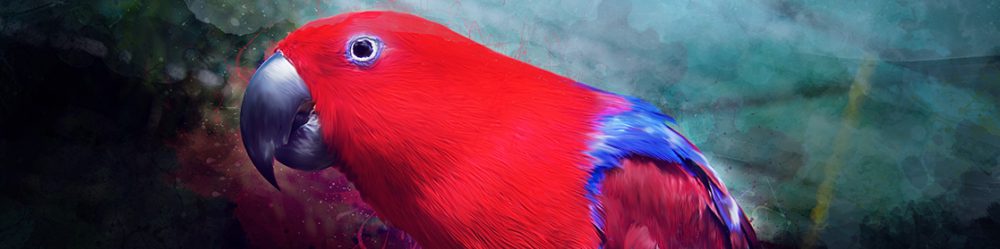
The Ultimate Guide to Eclectus Parrots
Introducing a second Eclectus parrot to the family
Eclectus are incredibly addictive. As a self-confessed Eckie-a-holic I know all too well the power these gorgeous birds can have over you. It’s almost impossible to stop at one Eckie. Take me for example. What started out as a pair of pet Eclectus parrots has now grown to 25 green and red-feathered kids, not to mention all the babies born here at Parrot Haven. Many of my clients can attest to this as they inevitably succumb to the Eckie addiction.
Will they still love me?
This is always the first question I’m asked when people consider adding a second Eckie to their family. It’s a valid concern as many other species of parrots pair bond strongly sometimes to the point of excluding their beloved owner. This certainly doesn’t apply to Eckies. The bond you share with your feathered friend is special and unique. This will continue to develop and flourish over the years even if you do add a second Eckie to your family. Like every good relationship you need to invest time and love into it. However the bond that you share doesn’t need to change, it will just evolve to incorporate two gorgeous kids.
Double the trouble and twice the fun
Many of our clients are proud parents of two Eckies and our Parrot Chatter forum is filled with stories about how owning a pair really is twice the fun. Naturally, it takes time for the two parrots to get to know each other. There is often a settling in process, but being flock birds, we’ve found Eckies will take the introduction of a new companion in their stride. Eckies love companionship and you’ll have peace-of-mind knowing they have a friend to keep them company when you aren’t home.
It’s in their genes
In the wild, Eclectus are social birds. They live in small flocks consisting of siblings and extended family. Eckies stay within the family group until he or she reaches sexual maturity, only leaving to find his or her mate. This natural flocking instinct helps owners in a captive setting for Eckies naturally desire companionship. Because of this, they will more readily adapt to a multi-parrot environment. However, before you rush out and buy your second Eckie, there are a great many things to take into consideration.
The bond you share with your first Eckie is vital
The last thing you want to do is bring home a second Eckie before you have properly bonded with your first. Even though Eclectus parrots adapt well to a companion, you are likely to run into difficulties from time-to-time. This will only be exacerbated if you haven’t formed a solid bond with your first parrot. Over the years, several of our clients were so besotted with their feathered friend that they wanted to buy a second kid almost immediately. This concerned me because their first Eckie had just settled in. They were still getting to know each other and bonding was in its early stages. Adding a second Eckie too early will only delay the bonding process. You shouldn’t rush into adding a second Eckie into your family until you have bonded with your first. We advise our clients to wait 6-8 months before they consider buying their second Eckie. This enables them to bond with their first Eckie and learn their personality. Understanding your first Eckie’s personality will assist you when it comes time to choose your second kid.
This is a small excerpt from our book: The Ultimate Guide to Eclectus Parrots. This chapter provides step by step instructions on how to introduce a second Eclectus. Our technique has been used by many Eclectus owners and it works!
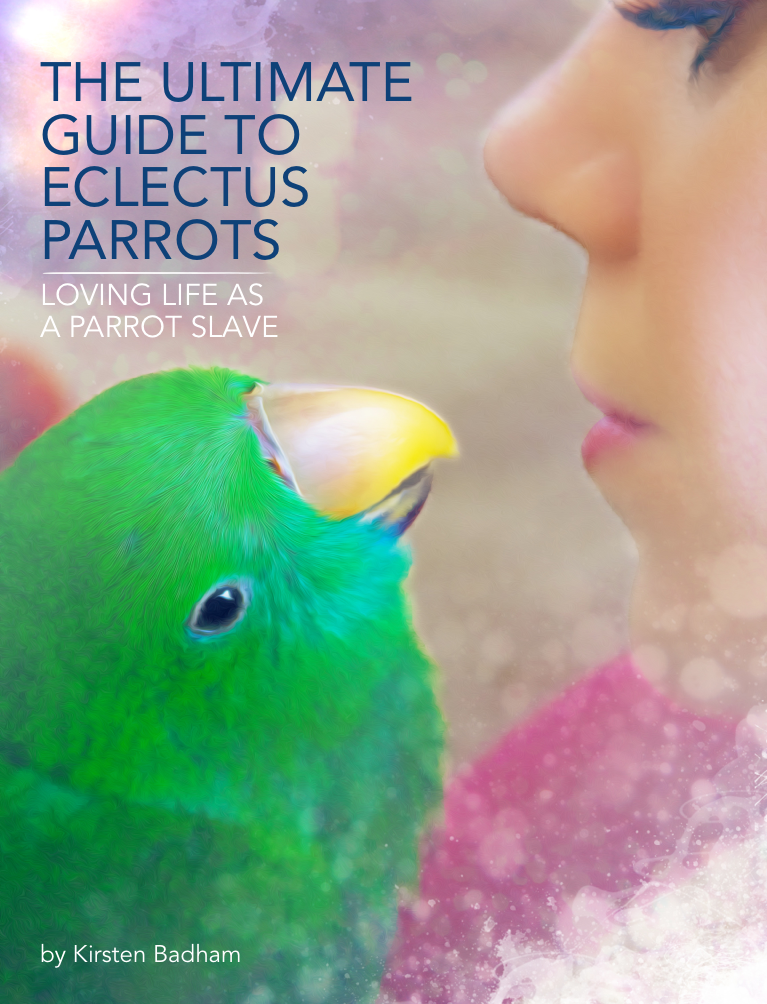

Included in this chapter
* Will they still love me
* Twice the mess?
* Double trouble and twice the fun
* It’s in their genes
* The bond you share with your first Eckie is vital
* Finding the perfect match
* Buying an unrelated pair
* Pairing two Eckies from different breeders
* Younger Eclectus
* Mature Eclectus
* Taking on an Eckie with an abusive past
* Finding a companion for a disabled Eckie
* Choosing the gender
* Introducing a different species
* Size difference
* Vocalization
* Cage setup
* Perches, toys, food bowls
* Cage placement
* First introductions
* Preventing the green eyed monster
* Slow introductions
* Out of cage time for your new kid
* Out of cage time together
* For those in a multi parent home
* Single parents
* Misplaced aggression
* Toe biting and eye fascination
* Let your kids set the pace
* It will happen
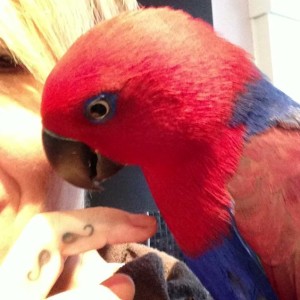
 Red on the other hand showed a great deal of interest in where ‘Mum & Dad’ lived and soon began lifting her foot up and looking up at the house when we would visit with the kids. We brought her a travel carrier which she stepped into quite happily and we brought her inside with us. Ever since then she has been an amazing pet. She helps Kirsten cook meals, prepare the fruit and veg that we feed the kids every day and she quite happily perches next to us when we work inside. She showers regularly with us and her vocabulary has grown amazingly!
 Kirsten has tried very hard over the years to balance her breeding technique with an insight into what the parrots experience. Being empathic is a good way to live not just when it comes to human relationships. While her method may be non-traditional from a breeding standpoint, the results speak for themselves. We both have the most amazing companion parrot in part due to the way Kirsten has raised and cared for her all these years.